Picture the typical network operations centre in 2026. The wall screens glow with dashboards from Cisco tools, Juniper portals, a legacy SNMP manager from a vendor nobody remembers purchasing, and three different ticketing queues. Each system speaks a slightly different language. Every alert triggers a manual handoff between teams. Root cause analysis takes hours, not minutes.
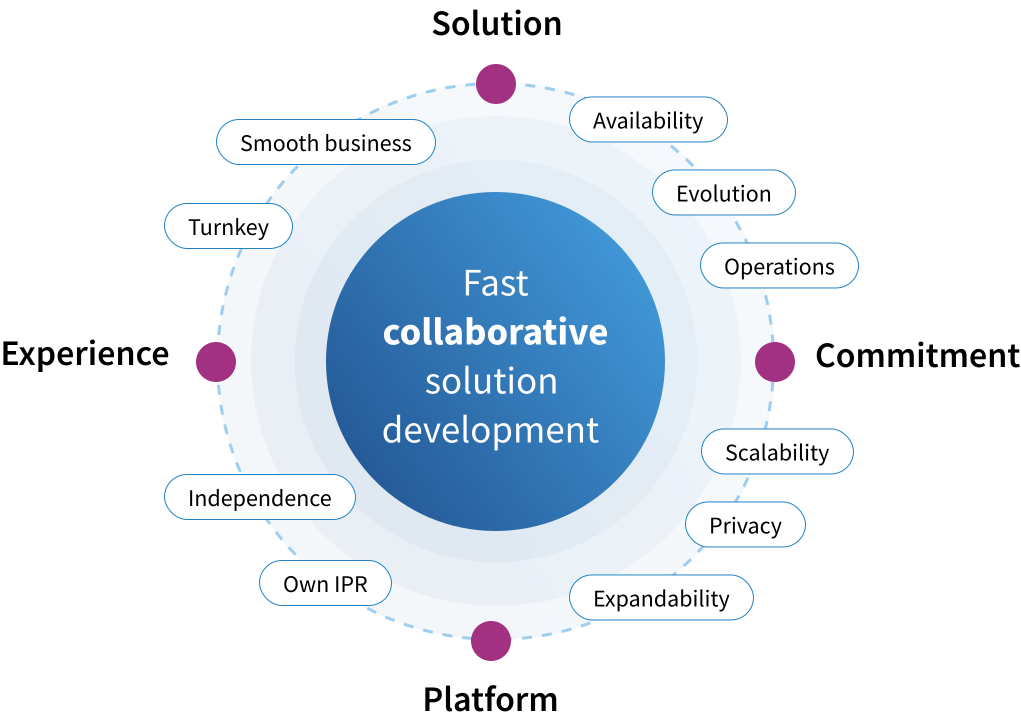
This is the reality BaseN has been solving since 2001. BaseN Platform was built from the ground up as a vendor-agnostic, mission-critical umbrella — a single pane of glass across the entire technology estate, regardless of which vendors make up that estate.
The multi-vendor problem is getting worse, not better
Organic network growth creates what BaseN’s research aptly describes as a “tech-soup”. Basically this indicates a patchwork of hardware from different generations and vendors that doesn’t talk to each other. For regional telco operators and large enterprises alike, this creates three compounding problems. And they are: fragmented visibility silos, exploding OPEX from reactive field visits, and scalability gaps as fibre expansion generates more telemetry data than legacy tools can process in real time.
Traditional monitoring tools were designed to manage a single vendor’s estate. They are siloed by design. Network Engineering, IT Operations and Quality Assurance each run their own toolchain. That means a hardware failure that causes an application outage can hide in plain sight, invisible to the team that could fix it fastest.
What the BaseN Platform actually does
BaseN Platform functions as both an Operational Support System (OSS) and a Business Support System (BSS), unifying legacy and modern infrastructure under one consistent, real-time view. Here are the core capabilities that matter most in a multi-vendor environment:
- Device template library: Over 2,000 device templates covering network equipment, data centre devices, smart meters and IoT endpoints from virtually every major vendor.
- Flow & telemetry analysis: Native support for Cisco NetFlow, jFlow, sFlow, IPFIX, NBAR and Juniper’s Junos Telemetry Interface, among many others.
- Root cause analysis: IssueManager correlates alarms across vendor domains, prioritises by user-defined SLA criteria and identifies root causes to cut secondary alert noise.
- Digital twin framework: A Reflective Digital Twin creates a live mirror of the entire network — telemetry, topology, configuration and security events — in one consolidated view.
- Predictive analysis: The platform forecasts trends and behaviour days or even years ahead, enabling proactive intervention before service degradation occurs.
- Open APIs: Customers get real-time programmatic access to fault and performance data via open APIs, enabling integration with existing BSS/OSS stacks.
Vendor coverage in practice
A common objection from prospects is: “What about our legacy vendor X?” In two decades of platform development, BaseN has addressed this systematically. The modular templating architecture makes it straightforward to onboard heterogeneous environments — including, for example, Cisco Meraki’s cloud-managed Wi-Fi infrastructure with both SNMP measurements and real-time trap support. Supported protocols and vendors include, but are far from limited to: Cisco (NetFlow, Meraki), Juniper (JTI, jFlow), sFlow, IPFIX, NBAR, SNMP, Legacy OSS systems, IoT endpoints, Smart meters, Energy devices etc.
From monitoring to orchestration
The shift BaseN advocates and enables; is from passive monitoring to active orchestration. By creating a living digital map of the entire network, operations teams stop context-switching between vendor tools and start making decisions from a single source of truth. New project streams no longer require building bespoke monitoring from scratch; they inherit the existing digital twin framework.
For regional telco operators managing complex, multi-vendor fibre networks, this translates directly to reduced OPEX: fewer truck rolls, faster mean-time-to-repair, and proactive maintenance that prevents the outages that erode customer satisfaction and trigger SLA penalties.
Security and compliance
For operators handling sensitive network and customer data, compliance is non-negotiable. BaseN Platform’s commitment to security is verified through AICPA SOC compliance, ensuring data is handled to the highest industry standards. The scalable architecture also supports multi-tenant deployments, so managed service providers can serve multiple customer environments from a single platform instance — each with appropriately separated access and reporting.
The bottom line
Multi-vendor network management is not a technology problem — it is a visibility and orchestration problem. The vendors are not going away; the complexity is not going away. What changes is whether your operations team has a coherent, real-time, predictive view of what is happening across that complexity — or whether they are stitching together stories from disconnected dashboards at 2 a.m. during a major incident.
BaseN Platform was built precisely for the second scenario. If your organisation is still managing vendor silos, let’s talk about what a unified digital twin approach looks like for your network.